
Public Liability vs Employers’ Liability: what every solar installer needs to know
Published on: August 10, 2026
By Ben Gardiner, Commercial Account Executive
If there’s one conversation we have more than any other with solar installers, it’s this one. Two policies, two very different jobs – and mixing them up is one of the most common (and costly) mistakes we see.
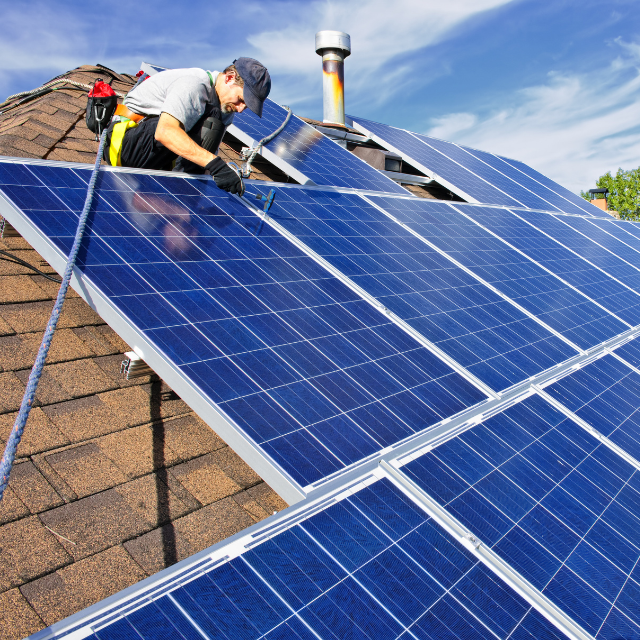
Public liability insurance protects you when your work causes injury or damage to someone who isn’t your employee. Picture this: you’re installing solar panels on a semi-detached house, a tool slips and it lands on next door’s conservatory roof. Or a passer-by trips over materials stacked on the pavement outside the job. That’s public liability territory – it covers legal costs and compensation if you’re found responsible for injury or damage to a third party or their property.
Employers’ liability insurance is a different animal entirely. This covers injury or illness suffered by anyone working for you – because of the work they do for you. And crucially, this isn’t optional. The moment you take on staff, even part-time, casual or a family member helping out on Saturdays, UK law requires you to hold employers’ liability cover with a minimum limit of £5 million. HSE can (and does) issue fines for trading without it, and they can be applied per day the business operates uninsured.
Where solar installers get caught out
The confusion usually comes from assuming one policy quietly covers the other. It doesn’t and the gap only shows up at the worst possible moment – when someone’s actually hurt and you discover the claim doesn’t fall under the policy you thought it would.
We also see this catch out growing businesses. A sole trader with public liability takes on their first apprentice or labourer and employers’ liability simply doesn’t get added because nobody flagged that the legal position had changed. It’s a completely understandable oversight – but it’s one that can leave you personally exposed and it’s also a compliance issue that could see you fined regardless of whether a claim ever arises.
What “enough” cover actually looks like
It’s not just about having the right type of policy – the limits matter too. Public liability limits of £1 million or £2 million are common starting points, but if you’re regularly working on higher-value properties, commercial premises or projects where the potential damage bill is significant, it’s worth reviewing whether that’s genuinely enough. Some main contractors and commercial clients will specify a minimum public liability limit (often £5 million or £10 million) before they’ll even let you tender for work – so it’s not just about protecting yourself, it can directly affect what jobs you’re eligible for.
The bottom line
Both policies exist to do completely different jobs and a solar installation business without either one is exposed in ways that can be genuinely business-ending. The good news is that getting this right isn’t complicated – it just needs someone to actually look at your specific setup rather than assume a generic policy has you covered.
Not sure exactly what you’ve currently got, or whether your limits stretch far enough for the work you’re actually doing? Complete our quote form and we’ll take your details to our panel of insurers who understand solar installation risks. Or if you’d rather talk it through first, call us on 01233 222 562 – we’re happy to cast an eye over your existing policy, free of charge and flag anything that looks like it might leave you short.